Raising the bar on social compliance in Galvano’s Chinese supply chain
News release 16 March 2026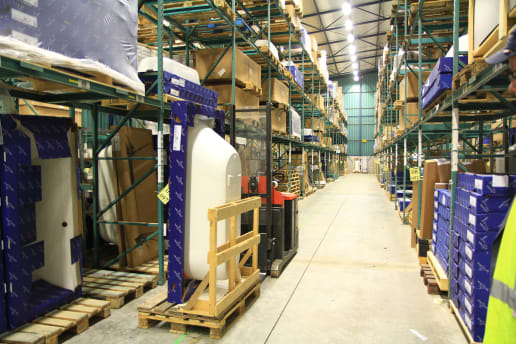
Sourcing products from the Far East can be associated with higher social and labor risks. For BME, responsible sourcing is therefore a critical part of its sustainability agenda. Through operating company Galvano, which sources sanitary, heating and plumbing (SHAP) products from China, BME works proactively to identify, manage, and reduce social risks in its supply chain. Central to this approach is the use of Amfori Business Social Compliance Initiative (BSCI) audits, combined with hands-on supplier engagement that goes well beyond minimum requirements.
A complex sourcing environment
Galvano sources products from a small group of ten suppliers in China. While the country has undergone major change over recent decades, it remains classified as a high-risk sourcing region. Hans Traa, SHAP Strategy Development Manager, explains: “People who are further removed from the topic often have outdated perceptions of China. Factory conditions have changed enormously in the past 30 years, with more automation, better social security, and improved worker protection. But that doesn’t mean risks no longer exist.” Those risks – ranging from labor conditions and working hours to health, safety and environmental practices – require continuous attention and oversight to ensure suppliers meet BME’s expectations on social responsibility.
Understanding and identifying social risks
Galvano pays close attention to “hidden” risks, such as child labor, excessive working hours, and unfair remuneration. “If you don’t visit a factory, you will never really know what’s happening,” Traa continues. “You might think you’re doing business with a factory, but in reality you’re dealing with an agency.”
For that reason, Galvano never places an order without first visiting the factory in person. Traa assesses not only production processes and capacity, but also management structures and working conditions. “I talk to the people on the factory floor. The more committed employees are to the company, the better the working conditions usually are. I judge factories on their social environment as much as on the products themselves.”
Strong BSCI performance
Amfori BSCI audits assess suppliers across 13 performance criteria, including fair wages, working hours, health & safety, and ethical business practices. Suppliers are rated from A to E (A being the highest), with BME requiring a minimum rating of C.
“In practice, a C rating in China already represents a relatively high standard,” Traa says. “But for me, that was not enough. I wanted Galvano’s suppliers to reach at least a B.” Achieving an A rating is extremely difficult in China due to cultural norms around working hours, but Galvano actively works with suppliers to improve performance across all other criteria. “Chinese factories can comply with very high standards – often much higher than people expect.”
Turning audit findings into improvement
Audit results are reviewed in detail and discussed openly with suppliers. “You can see exactly where a supplier scores lower,” Traa explains. “We focus on those areas and talk through what needs to improve – whether that’s working hours, salaries, or management systems.”
Suppliers are given time and guidance to address shortcomings, but progress is expected. “If there’s no improvement, we look for a replacement,” Traa says. “When we started, many suppliers had a C rating. Within two years, all of them had progressed to B.”
Long-term engagement and looking ahead
Reducing social risks requires ongoing engagement. Galvano maintains weekly contact with its suppliers through regular communication, online meetings and site visits. “You have to stay top of mind,” Traa says. “That only works if the relationship is personal and continuous.”
Looking ahead, Traa welcomes BME’s decision to raise social compliance expectations across its operating companies. “Raising the bar to B ratings sends a clear signal. With the right guidance, investment and long-term commitment, suppliers are willing – and able – to improve.”