Phasing out fossil fuels with heat pumps at BMB Hoogstraten
News release 18 March 2026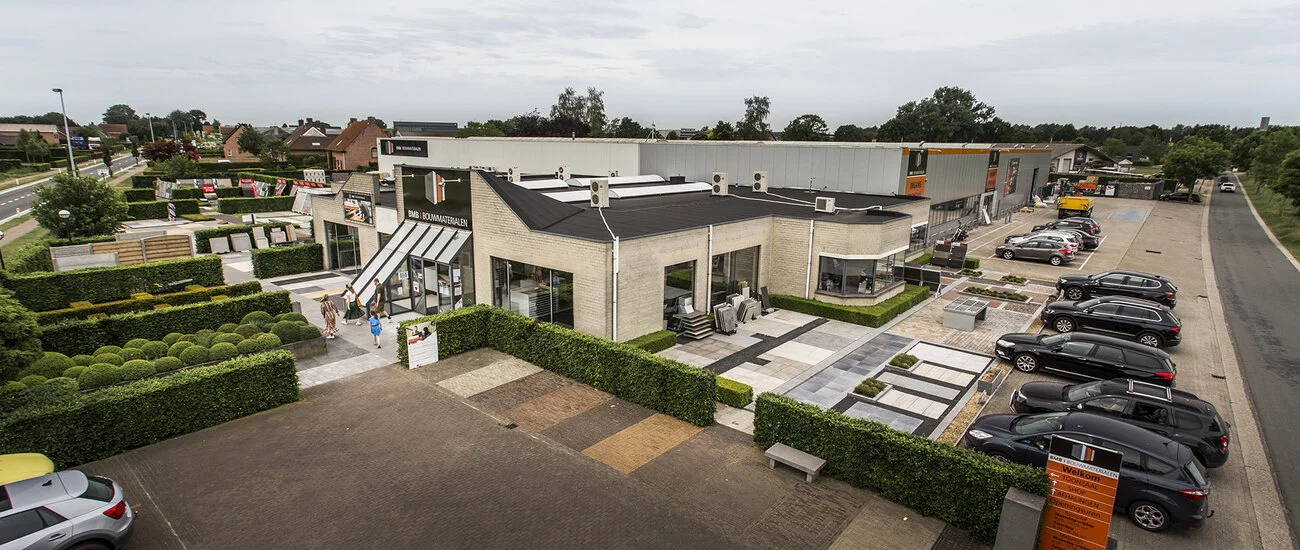
Reducing reliance on fossil fuels is a key part of BME’s sustainability strategy. At BMB Bouwmaterialen’s Hoogstraten location in Belgium, this ambition has translated into a concrete step: the complete replacement of oil-fired heating with heat pump technology. The project demonstrates how end-of-life equipment can become a catalyst for accelerating the transition to renewable energy, while improving comfort for employees at the same time.
A multi-functional site with high comfort requirements
The Hoogstraten branch combines a showroom for tiles and building materials with a pro shop. It also functions as a regional logistics hub, dispatching around 25 trucks. With a mix of administrative, sales, and operational activities, maintaining a stable and comfortable indoor climate is essential.
“In summer, indoor temperatures could sometimes be high, which could cause discomfort for employees and customers,” says Dennis Goossens, Facility Health & Safety Manager at BMB Bouwmaterialen. “The new system creates a comfortable working environment where colleagues can maintain full focus throughout the workday.”
From oil-fired heating to heat pumps
The trigger for change was partly technical. While part of the building was already heated and cooled using heat pumps, another section relied on an oil-fired boiler that had reached the end of its lifespan.
“Rather than replacing the boiler, all remaining oil-fired heating systems were eliminated and replaced with heat pumps for both heating and cooling,” Goossens explains. “This allowed us to move to 100% renewable energy for heating.” The decision also aligned with wider sustainability goals, including BME’s ambition to reduce carbon emissions and gradually phase out fossil fuels across its operations.
Integrating renewable energy on site
The new heat pump system complements the existing solar photovoltaic (PV) installation at the site, which generates electricity from solar panels. “In summer, cooling can be powered by the yield from the solar panels,” Goossens says. “This ensures improved working conditions, largely based on recycled green energy.”
As a result, the Hoogstraten location now operates with zero fossil fuels for heating. While electricity consumption has not decreased overall – heat pumps require significant electricity in winter – the switch has led to a clear reduction in direct carbon emissions.
Part of a broader energy-efficiency approach
The heat pump project fits into a wider package of energy-efficiency measures at Hoogstraten. In 2022, the site was also included in a CAPEX relighting project, after which the entire location was converted to LED lighting.
Although the transition was driven by necessity, it offers a practical model for future upgrades at other locations. “There are other sites where a similar transition could be implemented,” Goossens notes. “Naturally, available budgets will determine the pace, and this will be part of a multi-year plan.”